
CASE STUDY: Pill Reminder App
Project overview
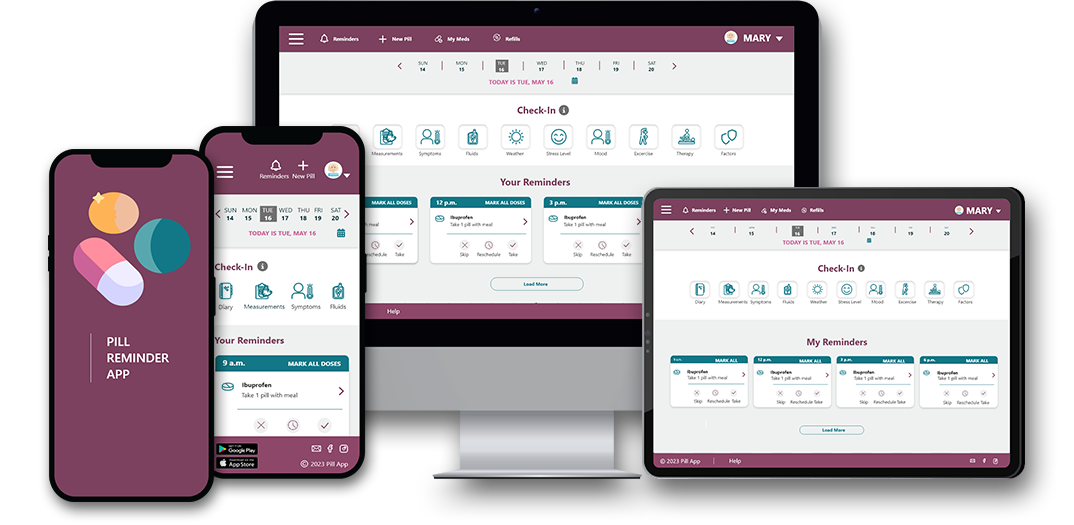

Product
My Pill Reminder App is an app that helps senior citizens and busy active professionals to stay on a track when taking their meds and suppliments, hence results in improvement of their well-being and overall health.

Problem
Currently the existing Meds Management apps require a lot of time to manually enter the data and some users due to their chronic conditions get discouraged to use it. The users also get overwhelmed by navigating the apps.

Goal
Design an app and a website that will be easy to use and relatively fast to enter a medical information. Additionally, an app and a web will have a functionality to detect any interactions between medications and alert the users about them.

My role
UX designer in a charge of designing the app and the responsive website from conception to delivery.

Responsibilities
Conducting interviews, creating wireframes, delivering low and high-fidelity prototyping, conducting usability studies, taking into consideration accessibility, making several rounds of design iterations, determining information architecture and responsive design.
User Research
Summary
During the initial phase of my indirect research, I learned that 7 in 10 Americans take medications but only 50% take them as prescribed.
Most older users need an app that they can use despite their musculoskeletal pain and declining vision related to aging. The current existing medication management apps are missing some essential technological enhancements and I would like to address these gaps in this project.
Personas


Competitive audit
The competitor’s audit revealed some of the important gaps and opportunities that became my main focus point of this project.


Ideation

Design
Digital wireframes

Low-fidelity prototype
Creating a low-fidelity prototype for usability testing was my next step. This prototype features a simplified process of adding a new medication to the app in Adobe XD.

Usability study
Parameters:
- Study type: Unmoderated usability study
- Location: United States, remote
- Participants: 5
- Length: 30-40 minutes
Here are the main findings:

Add a medication
People were discouraged when adding a mediction to the app due to excessive and time-consuming typing.

Navigate an app
People want to have easy access to main information like adding a med, reminders, and refills.

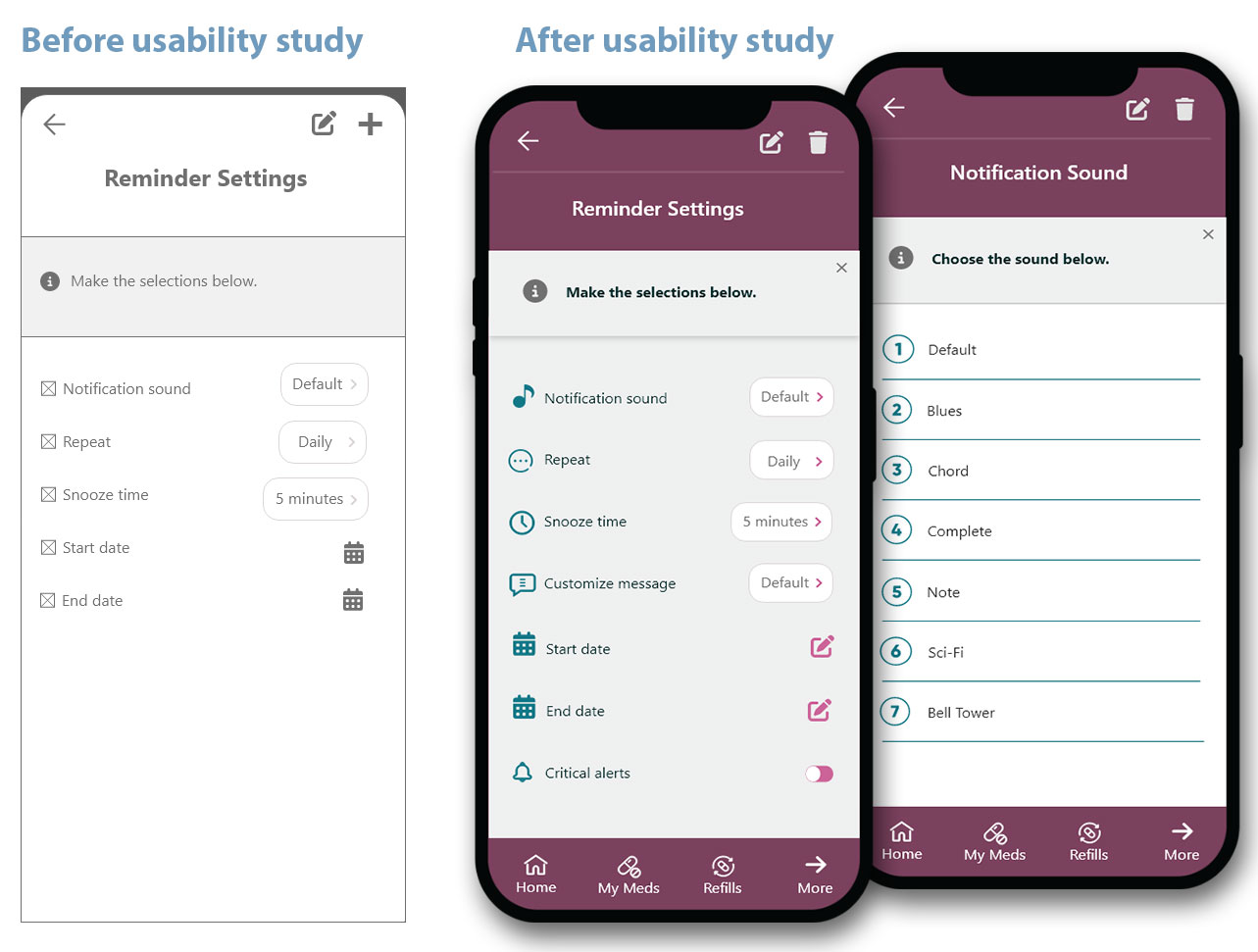
Customize Reminders
People want to have more choices to set their reminders about taking a pill.
Mockups


Hi-fidelity prototype
The high-fidelity prototype also demonstrates the same user flow as the low-fidelity prototype. Design alterations that followed the usability study were incorporated into this prototype built in Adobe XD.

Accessibility
-

A color palette that complies with 4.5:1 contrast requirement to meet the AA standards.
-

Main icon labels and headings hierarchy that are readable to screen readers.

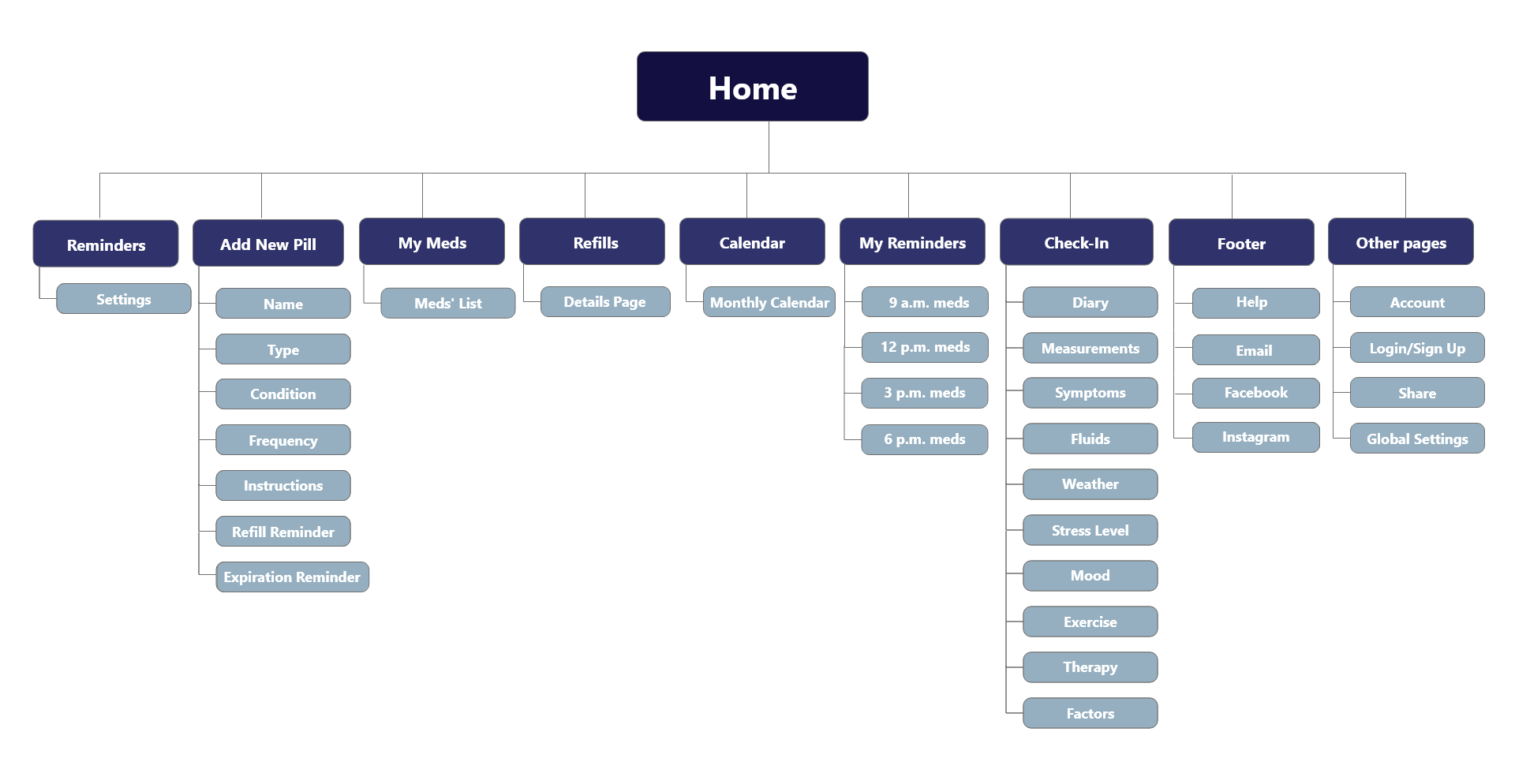
Sitemap for responsive website
This sitemap represents a responsive website for the Pill Reminder project. I benefited from it to determine the logical and cohesive structure that will translate easily across different devices.
Responsive designs
I designed and optimized this app to be displayed properly on desktop mobile and tablet devices.

Conclusion
Takeaways
-

Impact
An older generation of users was excited that this app was designed specifically for them. Because truly improving patient medication adherence starts with the ability to add a medication to the platform that would remind them about taking their meds. -

What I learned
The project can become overwhelming at first. Therefore dividing the work into phases and focusing on a particular stage at once makes the whole process more manageable. The satisfaction that comes with helping those in need is priceless.


 Beata Risner